Conventional workflow, and OpenBrIM
The same bid period, two ways of working.
Time to a code-checked answer
Conventional work redoes the model, analysis, checks and take-off for each what-if. In OpenBrIM one model runs all four.
Options code-checked in full per ATC round
The few the team reviews are picked from far more than a conventional workflow can model.
Bar lengths are relative.
Price decides most awards
The owner turns price and technical points into one ranking, so the search is for the best price and schedule the formula will reward.
The search
- billionsoptions
- thousandsscreened
- hundredsanalyzed
- tenscode-checked in full
- 5 to 20to the team
The ring marks the option the owner's formula ranks first.
How it works
The AI decides what to try next, within the engineer of record's design criteria and steered by the team's feedback. Deterministic OpenBrIM software calculates the engineering, the quantities and the score.
What the score uses
Cost in the search comes from public data, applied to each option's quantities.
What the designers and the contractor add, such as production rates, crane sizes or fabrication limits, counts with the weight the team gives it.
Quantities go out; one total per alternative comes back and counts like any other team input.
One alternative, start to finish
Every alternative that reaches the team went through this loop.
Change the parameters
The agent picks spans, girder type and depth, piers, foundations and the erection method, within the engineer of record’s design criteria and the contractor’s construction limits.
OpenBrIM builds the model
Girders, deck, piers, footings and piles come from the bridge library, with their construction stages.
Run finite element analysis
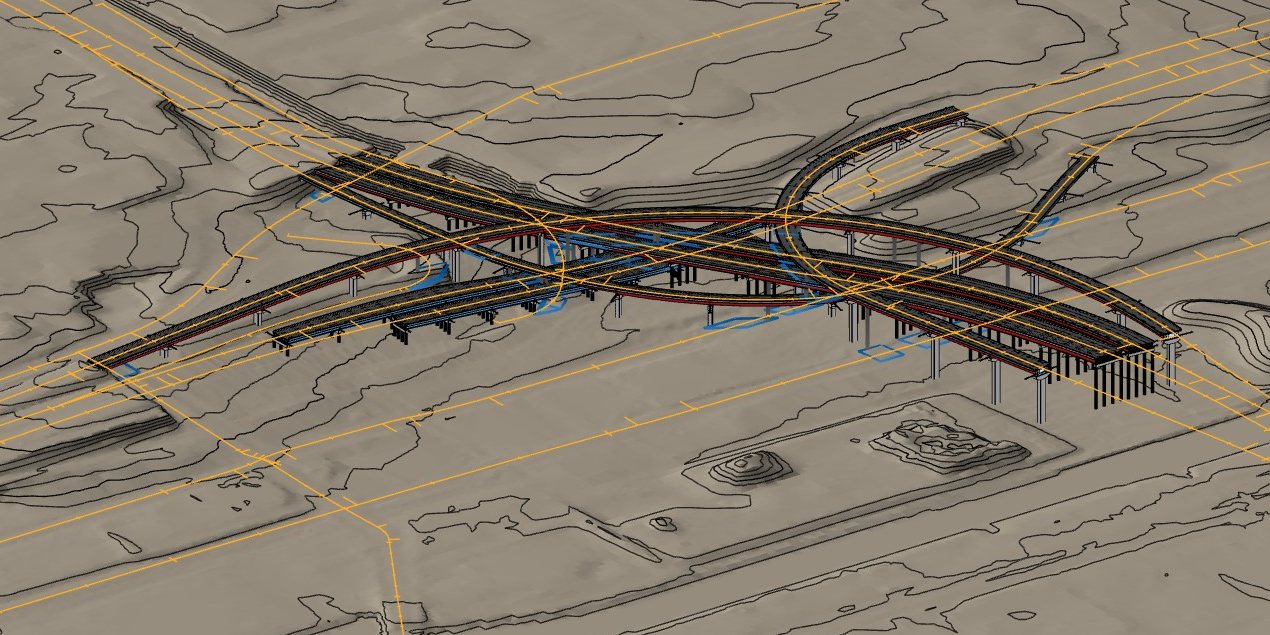
A 3D model, stage by stage, the way it will be built.
Check the specification
AASHTO LRFD, and the RFP’s own limits: clearances, spans, staging. Each ratio traces to its limit state, load combination and article.
Measure what it takes to build
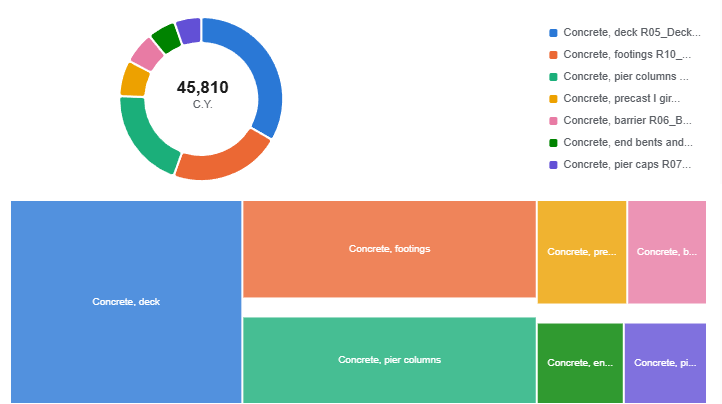
Quantities, fabrication pieces, crane picks and schedule are the objective functions. They come out of the same model.
Score it, then try the next
The owner’s formula turns them into one number and a rank. Then the agent tries the next option. Of billions of options, tens are code-checked in full and 5 to 20 reach the team.
Ranked by the owner's award formula
A saving and a lost technical point become one number.
Price ÷ technical score, $1.0B bid scored 80: one point is worth about $12.5M. A $15M saving that costs half a point still comes out $8.75M ahead in the owner's ranking. The team sets the expected point change; the formula turns it into dollars.
Who does what
The OpenBrIM team joins yours for the pursuit. Each party keeps the decisions it is responsible for.
Joins the pursuit and every review. Runs the search, analysis, checks and quantities in the design firm's workspace, and prepares ATC backup.
Owns the models and the design criteria. Reviews each round, adopts and seals.
Chooses methods, feeds back each round, prices in-house and submits the price.
Steps
No project data is shared before the NDA.
Before we start
- Contact and conflict check
- NDA and project data
- Quote, then licence if needed
Bid period
- Base conceptfirst 2 weeks
- Alternativeseach ATC meeting
- ATCslast ATC date
- Proposaldue date
After award
- Final design
Each review round, in the team's OpenBrIM workspace
- Pay-item quantities, live from the model
- Field pieces and crane picks
- Activities and durations
- Check summary with AASHTO articles
- ATC backup for the engineer of record
Terms
The same for every pursuit.
No competing team, and not the owner. We don't tell other teams who asked. The OpenBrIM licence stays open to every client.
The design firm, as engineer of record, owns the models and the design criteria, and adopts and seals the design. Criteria change only with its approval.
NDA first. No unit costs asked. Data stays in the design firm's workspace, and the contractor's inputs are seen only by the pursuit team. Our access ends with the pursuit.
Suggested from the bridge construction budget, and it varies per project. See Pricing below.
Pricing
Two parts. The licence applies only when the team's design firm is not yet an OpenBrIM client.
For a design firm that does not have OpenBrIM yet. The pursuit runs in its workspace, and the models stay with it for final design.
We suggest the budget from the bridge construction budget you send us (see below). It varies per project.
Discuss a pursuit
Email us the owner and project, the proposal due date and the bridge construction budget. We reply to say whether the procurement is still open (no other team has it), with a suggested budget; it varies per project.
No confidential material in the email. Project data goes into the design firm's OpenBrIM workspace after the NDA.
Also from the OpenBrIM team
The same software and the same team, for other ways bridges are delivered.