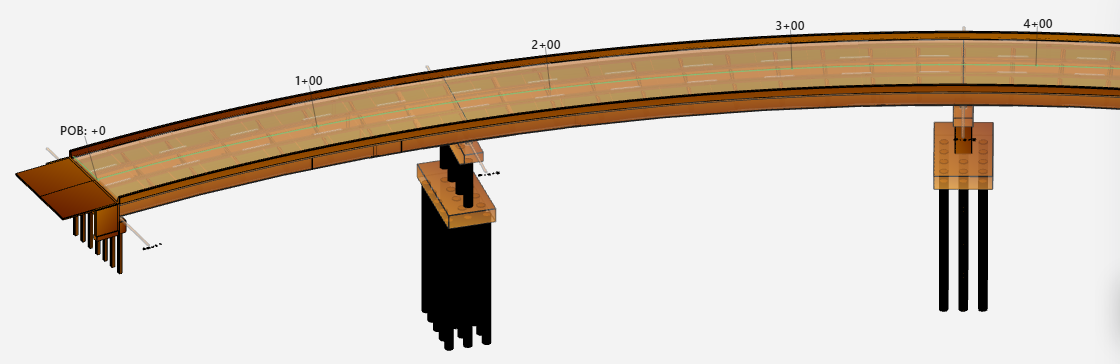
The first contractual IFC bridge in the US was modeled in OpenBrIM
PennDOT's US 6 over French Creek, an FHWA ADCMS pilot, was let with its IFC model as a contract document. TPF-5(523) then used it to test the national bridge requirements.
- The bridge was modeled in OpenBrIM and exported to IFC from it.
- Of the three pilot bridges TPF-5(523) tested, it was the only one whose IFC went out as the modeling software exported it (Information Delivery Manual, Version 2.0). The other two teams edited their IFC files after export.
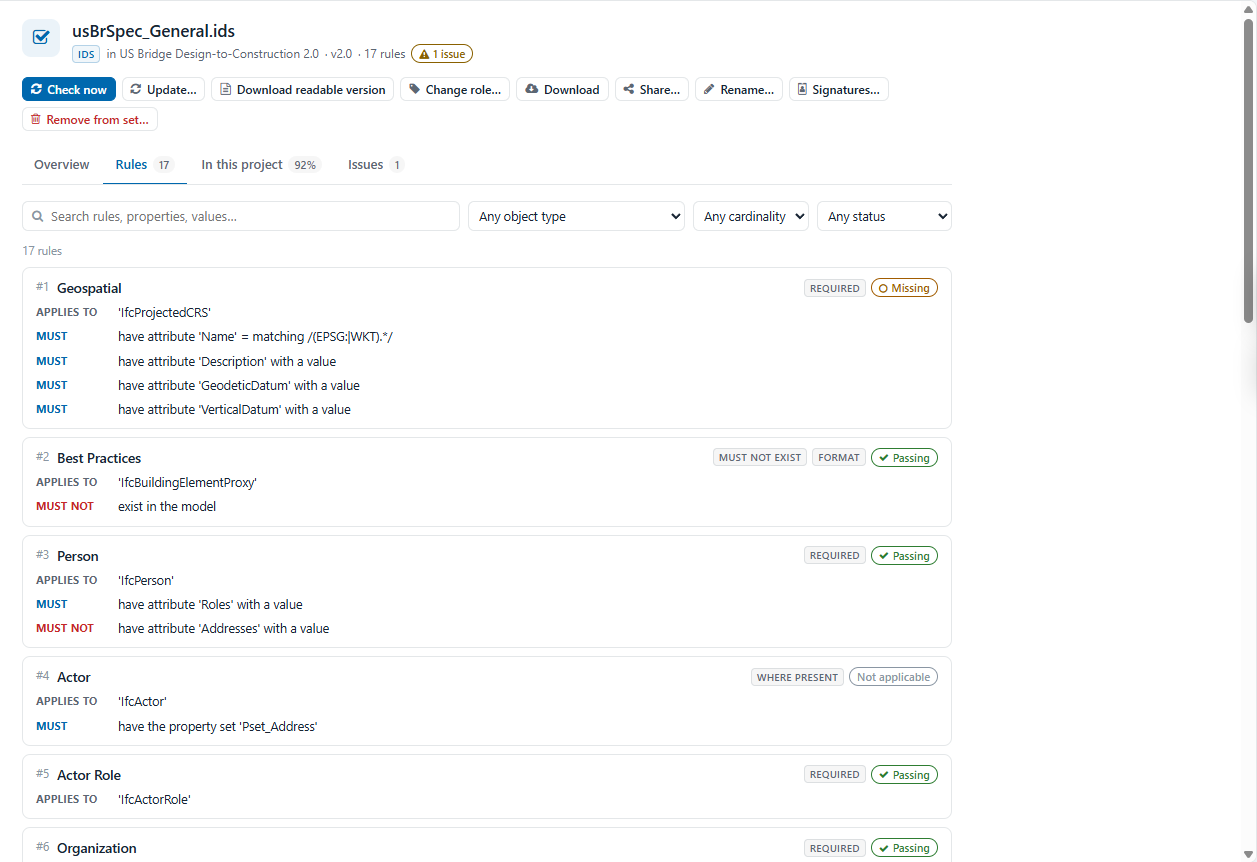
- The IFC was checked with the buildingSMART Validation Service and against the bridge IDS of TPF-5(372).
- Its rebar was modeled in ProStructures, in a separate IFC file. OpenBrIM now models rebar and writes it into the bridge's own IFC.
| Bridge | Modeled in | IFC after export |
|---|---|---|
| US 6 over French Creek | OpenBrIM | Used as exported |
| Concrete I‑beams | OpenBridge Modeler | Edited in Blender/Bonsai |
| Concrete bulb tees | OpenBridge Modeler | Edited in Quadri |
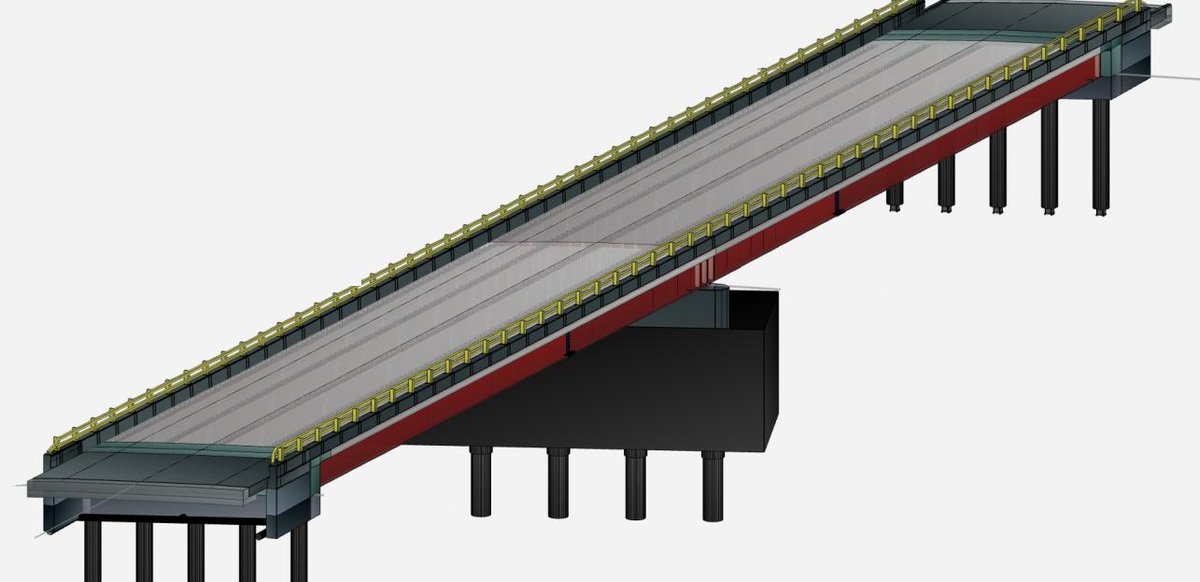 In OpenBrIM
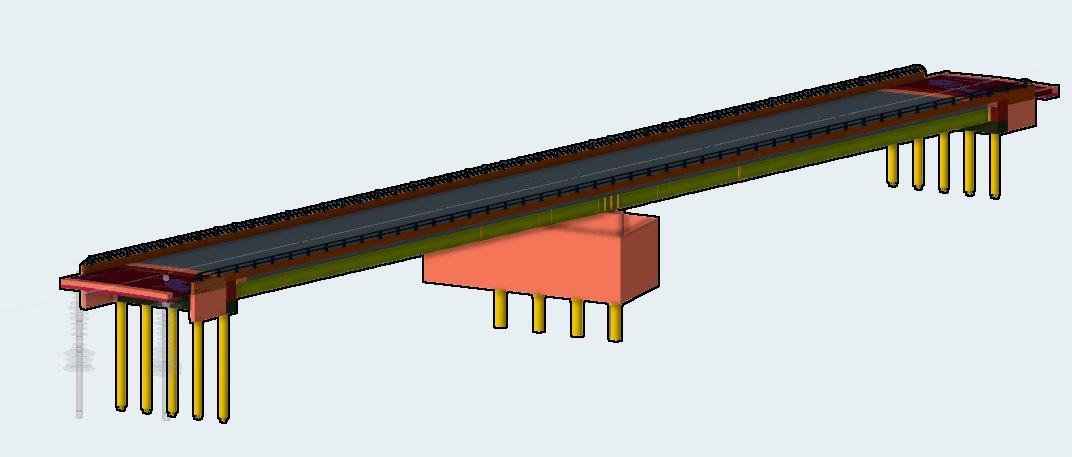 The delivered IFC model
For consultants
Train your team for the transition
Design your traditional bridge projects in OpenBrIM's parametric workflows, from the 3D model to load rating. Working this way every day gets your team ready for digital delivery. No pilot needed.
Built from parameters. Change an input and the bridge follows.
Finite element analysis of the same bridge.
Specification checks, traced to their AASHTO articles.
CAD plans and details from the model.
To the AASHTO Manual for Bridge Evaluation.
Information Delivery Specification (IDS)
What information must this bridge model contain? An IDS answers that question in rules software can check.
Industry Foundation Classes (IFC) is the open exchange format for the bridge's elements, geometry and properties.
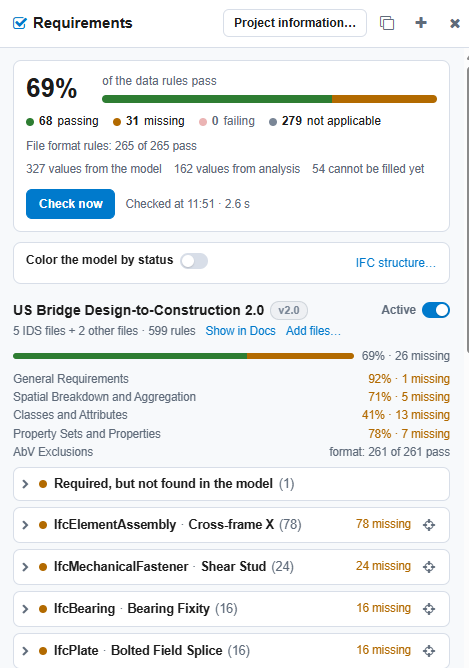
An IDS names the elements to check and the information each must carry. A checker reports missing properties and values that break the rules.
| Requirement | In the model | What the check reports |
|---|---|---|
| Bearing type is required | Elastomeric | Present, and an allowed value |
| Load capacity is required | Missing | A required property is missing |
| Material strength must be greater than zero | −5 ksi | The value is out of range |
An IDS checks that the information is there and valid. Whether the bridge is adequate is still for analysis and design checks.
For US bridges
Design-to-Construction 2.0
Latest edition, May 1, 2026
The national IDS from TPF-5(523): five files, 599 rules. Built into OpenBrIM.
- General Requirements17
- Spatial Breakdown and Aggregation45
- Classes and Attributes146
- Property Sets and Properties130
- AbV Exclusions261
- Rules599
Agency additions
Add your own property sets. The national set stays as published.
Have your own IDS files? Add them as they are.
- Your IDS files are checked too, against IFC 4.3 and each other.
- New versions are compared: rules added, removed and changed.
For bridge owners
Pilots improve the IDS
States fund the national requirements through TPF-5(523), and pilots through their own programs and FHWA ADCMS grants. OpenBrIM carries the requirements into each pilot model, and what the pilots find back to TPF-5(523).
IDM Version 2.0, on its three bridge pilotsThese pilot projects provided critical feedback to
the project team that resulted in numerous enhancements to the original set of exchange requirements.
Design-to-Construction 2.0 is built into the OpenBrIM Library and follows each version TPF-5(523) releases. Agency additions sit on top.
The checker passes all 334 buildingSMART IDS test cases. When a rule fails, the cause is in the model or in the rule, not in the checker.
The check lists what the model still needs, and separately what is wrong in the rules, such as a rule that can never fire or a misspelled value.
Each defect in the rules goes to TPF-5(523) as a proposed fix, with the bridge and the objects that show it.
How a pilot runs
Three phases. A check takes seconds, so during design it runs as often as needed.
Requirements
- Choose the versionDesign-to-Construction 2.0
- Add agency additionsif any
- Export the IDS files
Design
- Add the requirements to the project
- Model the bridge
- Check the modelwhat is missing, and where
- Enter the valuesIFC tab or Excel
Delivery
- Export IFC 4.3 or DGNIFC checked on export
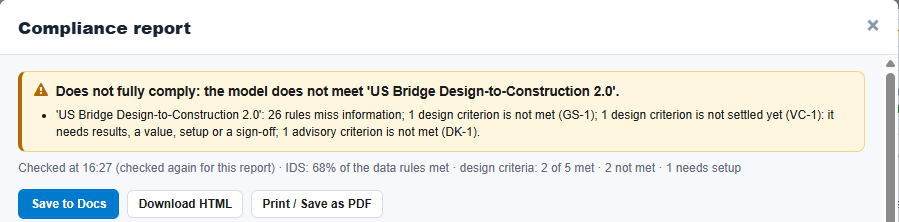
- Compliance report and BCF
- Findingsinto the next version
Who does what
Each party keeps the decisions it is responsible for.
Sets the requirements, their version and the delivery format. Reviews the model and the compliance report, and accepts the delivery.
Designs the bridge in OpenBrIM, enters the values the rules ask for, exports the IFC or DGN and signs the compliance report.
Sets up the pilot workspace, trains the owner's and the consultant's teams, and keeps Design-to-Construction 2.0 current in the Library. Records the pilot's findings and sends each defect in the shared requirements to TPF-5(523).
In the software
What the consultant works with, and what you review.
In the format your agency requires
IFC 4.3, DGN or both, from the same model.
IFC 4.3
The open format for bridges, ISO 16739-1:2024- Checked against your requirements before it is saved
- No editing after export: the OpenBrIM pilot in IDM Version 2.0 needed none
- Rebar included: bars modeled in OpenBrIM are written with the bridge
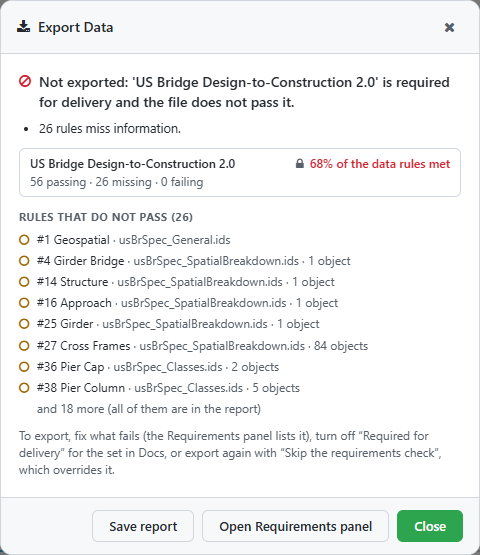
- With a compliance report and BCF issues for your review tool
DGN
In your own workspace- Your seed file and units
- Each element on your levels
- Item types with properties and quantities
- 3D solids or meshes
Both come with plans and quantities from the same model. The requirements check runs on bridges designed in OpenBrIM, on their IFC. For a DGN delivery, the same model's IFC is checked.
Open standards
The requirements, the model and the issues each use a published standard.
Information Delivery Specification: the requirements, in a form software can check.
The model, with its bridge, parts, property sets and quantities.
BIM Collaboration Format. The issues, readable in your review tool.
The property sets, properties and allowed values for US highway bridges.
After delivery. OmniInfra, an FHWA SBIR Phase II project, builds open-standards software so that contractors, inspectors and field crews can use the IFC 4.3 model. Be part of its co-design team: pilot it on your project, free.
Join as a co-design partnerBring your team to OpenBrIM
Training, a pilot or both. Email us about your team, and we reply to set up a call.
Advanced Digital Construction Management Systems (ADCMS) is a program of the U.S. Department of Transportation, Federal Highway Administration. TPF-5(523), Building Information Modeling (BIM) for Bridges and Structures – Phase II, is a Transportation Pooled Fund study led by the Iowa Department of Transportation. Naming these programs, PennDOT or its projects on this page does not imply their endorsement of OpenBrIM. IFC, IDS and BCF are standards of buildingSMART International.