
Everything in one model
Built from parametric library objects, so the parts never fall out of step with each other.
Every component built from parameters. Change an input and the structure follows.
The analysis model comes from the same objects, with line, surface, volume and spring elements.
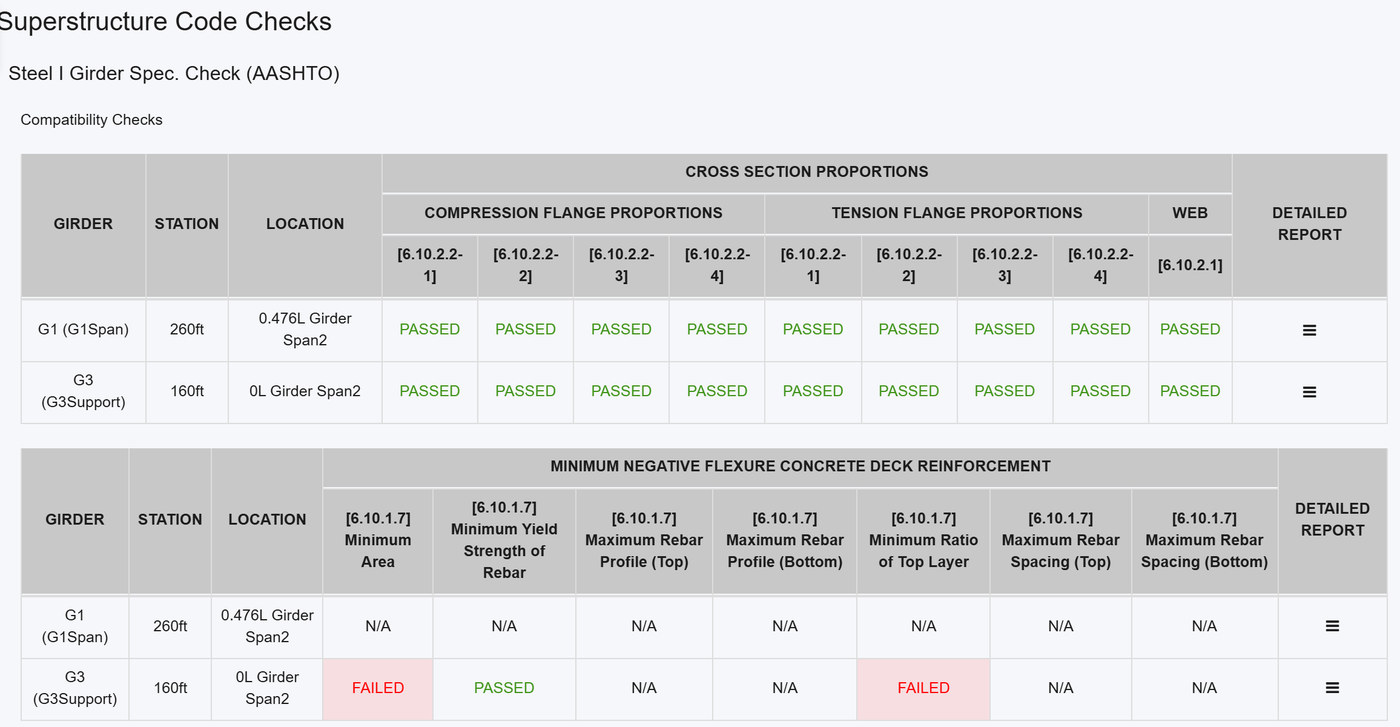
Members checked against AASHTO LRFD, each check traced to its article.
2D drawings from the model, updated when it changes.
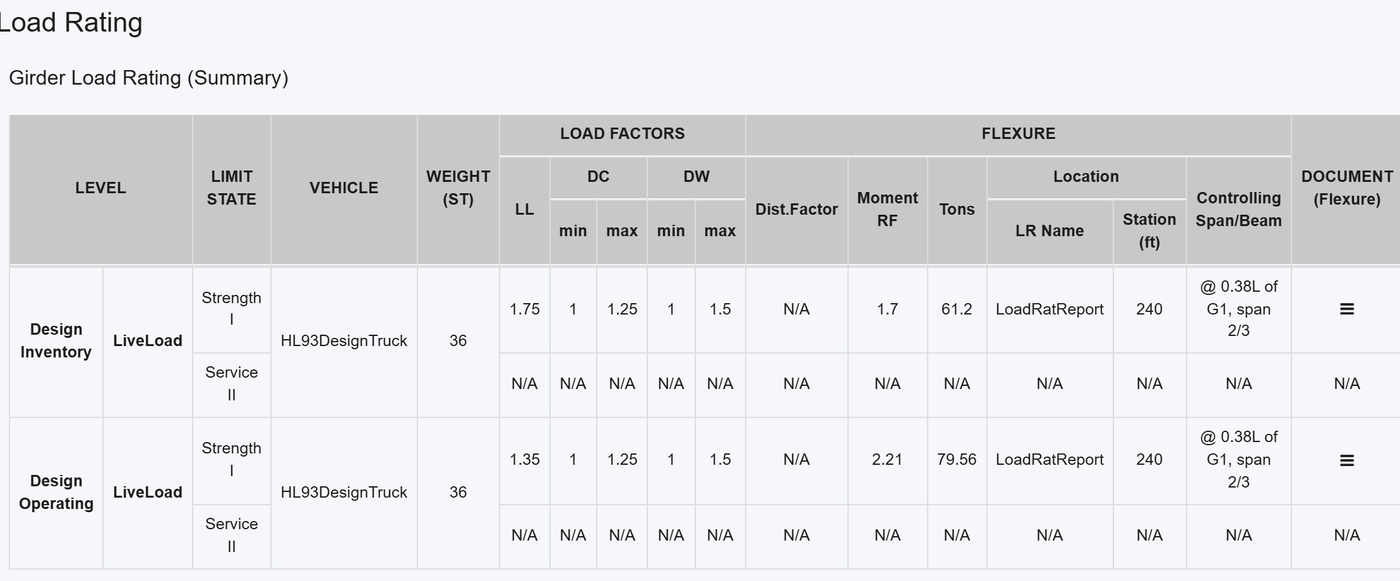
Rating factors to the AASHTO Manual for Bridge Evaluation, in the same model.
Design reports, quantities and IFC 4.3 from the same model.
Finite element analysis built for bridges
A 3D finite element engine for bridge engineering, running in the browser on the model you are already working in.
Accepted by PennDOT for refined analysis, LFD and LRFD, on October 1, 2021. The review covered the design forces the analysis computes. Read the letter
Elements
- Springs, linear and nonlinear.
- 6×6 stiffness elements.
- Line elements: linear or nonlinear, elastic or inelastic.
- Surface elements, linear and nonlinear.
- Volume elements.
Loads
- Nodal loads and support displacements.
- Element loads.
- Temperature: uniform, linear and nonlinear gradient.
- Vehicular and pedestrian live loads.
- Prestressing and wind.
Analysis types
- Linear and nonlinear static.
- Pushover and buckling.
- Influence-surface live load.
- Eigenvalue, Ritz and response spectrum.
- Time-dependent staged construction.
Staged construction, over time
Parametric staged construction analysis: each stage adds its members and loads, and the structure carries them as it stands at that point, with time-dependent effects from one stage to the next.

Time-dependent effects
- Elastic modulus that changes with age.
- Concrete creep and shrinkage.
- Steel relaxation.
- Prestress losses from creep, shrinkage and superimposed loads.
- Geometric and material nonlinearity.
Construction methods
- Girders and slabs placed in stages on continuous structures.
- Span-by-span segmental erection.
- Cast-in-place and precast balanced cantilever.
- Incremental launching.
- Cable-stayed, extradosed and suspension bridges.
In each stage
- Elements switched on and off.
- Supports added and removed.
- Branches of stages that split from one point.
- Pretensioned and post-tensioned tendons: bonded, unbonded or external.
- Multi-step stressing, with short- and long-term losses.
Live load where it governs
For any result, OpenBrIM places the design vehicles at their critical positions on the influence surface.
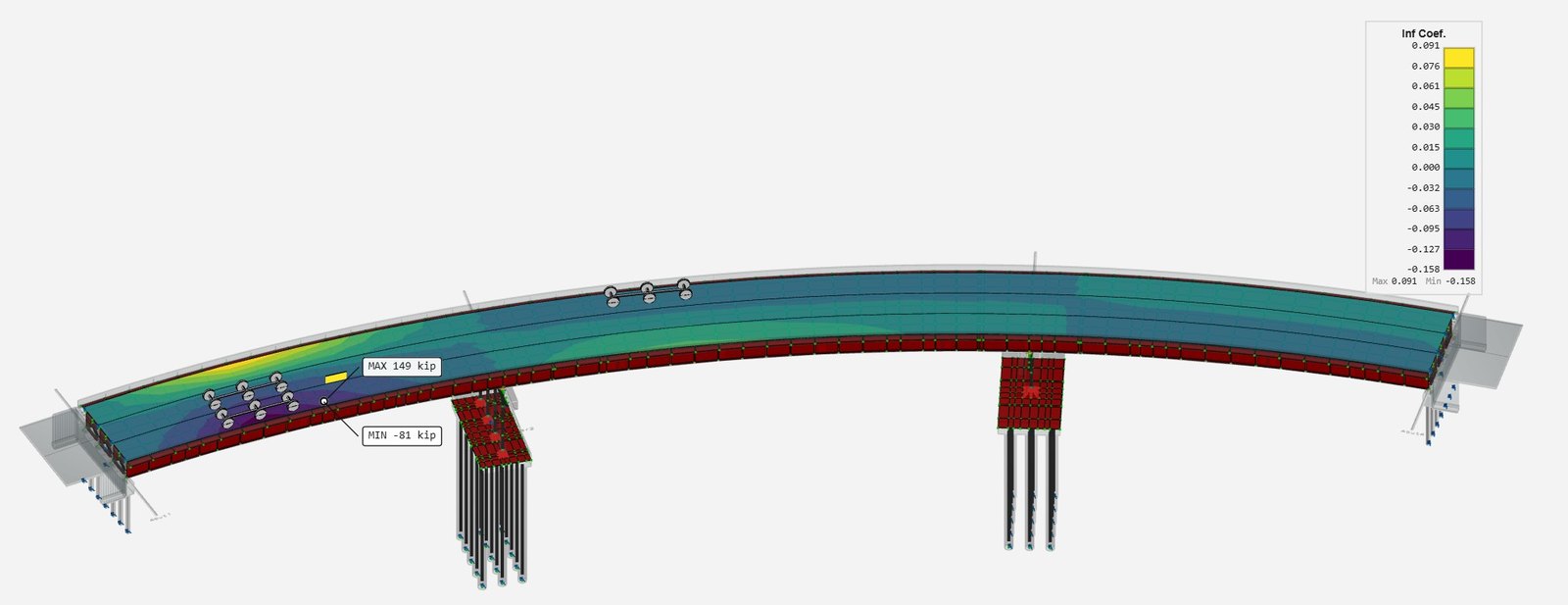
Vehicles and uniform lane loads are positioned to maximize each effect.
Lanes are placed across the deck, not only along it.
The other forces acting at the moment one force is at its maximum.
Code checks you can trace
Girders, cross-frames, splices, shear studs, pier caps, piers, pile caps and piles, checked against AASHTO LRFD.
- Each check names the article it comes from.
- Passed or failed for every girder location.
- The full calculation behind every row, one click away.
Load rating in the same model
Design inventory and operating rating factors, in tons, with the controlling location. When the structure changes, rate it again.
Load rating and asset managementIn the browser
Nothing to install, on any computer.
Sign in from a browser and the whole model is there, analysis included.
Several engineers work on one project, and see each other's changes.
Ask about the model, its results and its checks, in plain words. OpenBrIM AI
See it on your structure
We set up a call and walk through a model of your choice.